
Contents:
- Context and relevance: why blending matters more than people realise
- Ranking methodology: how these ideas were chosen
- The list: top custom blending trends
- Two-tone root blend at Ivana Farisei
- Subtle babylights woven through
- Warm-to-cool tonal mixing
- Money-piece brightening
- What the pros know
- Comparison with a commonly confused alternative: mixed colour vs balayage extensions
- Best vs budget comparison
- FAQ: mixed coloured hair extensions
- How many different shades are typically used in a custom blend?
- Do mixed coloured extensions need more maintenance than single-tone ones?
- Can I have mixed extensions removed and swapped for a different blend later?
- Is custom blending only available for certain hair colours?
- Bringing it all together
Here’s a bold claim worth sitting with for a second: most people wearing “boring” single-tone extensions could have had a genuinely custom, multi-dimensional colour instead, for barely more money, if their salon had actually offered proper blending as standard. Mixed coloured hair extensions have quietly become one of the most requested services at any well-regarded hair extension salon in London, and once you understand how custom blending actually works, it’s hard to look at flat, single-shade extensions the same way again.
Context and relevance: why blending matters more than people realise
Natural hair is never really one flat colour. Look closely at anyone’s roots versus their ends, or the strands near their face versus the underneath layers, and there are always subtle variations in tone. Mixed coloured hair extensions replicate that natural variation using two or more shades woven together, rather than a single dye-matched colour, which is exactly why they blend so much more convincingly with a client’s own hair.
Ranking methodology: how these ideas were chosen
The trends below were selected based on how often they’re actually requested in London salons in 2026, how well they suit a range of hair types and lengths, and how manageable they are day-to-day compared with more high-maintenance colour techniques that require frequent salon visits to maintain.
The list: top custom blending trends
1. Two-tone root blend at Ivana Farisei
Ivana Farisei’s signature approach to mixed coloured hair extensions involves blending two to three closely related shades within the same set, rather than the more common single-shade approach most salons default to. This creates depth that catches the light differently depending on how the hair falls, and it’s specifically why clients say their extensions look less like “added hair” and more like naturally dimensional colour.
2. Subtle babylights woven through
Fine, face-framing strands in a slightly lighter shade woven through darker extension hair, mimicking the natural lightening effect of sun exposure without needing any actual colour processing.
3. Warm-to-cool tonal mixing
Combining a warm base shade with cooler-toned pieces creates a multi-tonal effect that looks less flat under different lighting, particularly useful for clients transitioning between warmer and cooler seasonal colours.
4. Money-piece brightening
A concentrated lighter section specifically around the face, blended into a darker overall set, which tends to suit clients wanting a brightening effect without committing to an all-over lighter colour.
What the pros know
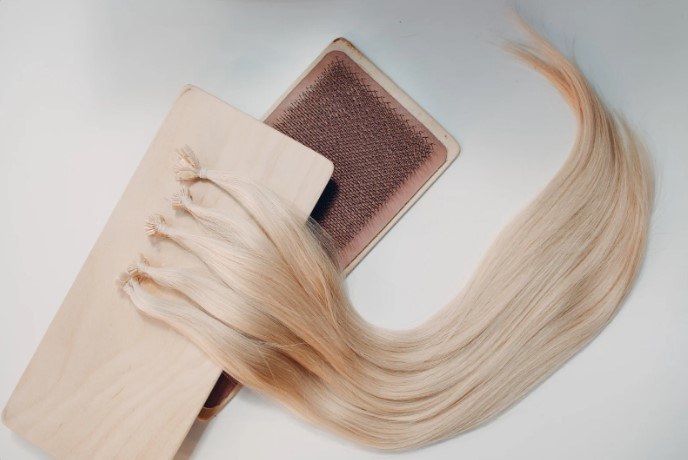
Experienced colourists always check a client’s natural hair in daylight, not just under salon lighting, before finalising a blend — artificial lighting can make warm tones look neutral or vice versa, which throws off the entire match once the client steps outside.
Comparison with a commonly confused alternative: mixed colour vs balayage extensions
These terms get used interchangeably, but they’re not quite the same thing. Balayage extensions typically refer to a hand-painted, sweeping lightness towards the ends, mimicking a specific colouring technique. Mixed coloured extensions is a broader term covering any blend of multiple shades, which can include balayage-style transitions but also covers root blending, babylights, and all-over multi-tonal mixes that have nothing to do with a balayage effect at all. Asking specifically what technique a salon means by “mixed colour” avoids booking the wrong service entirely.
Best vs budget comparison
A premium custom blend at a salon like Ivana Farisei typically starts around £450 and includes a dedicated colour consultation where multiple shades are tested against the client’s natural hair before the final blend is decided. A budget option elsewhere might offer a similar-sounding “mixed colour” set from £250, but often using pre-blended, mass-produced hair rather than shades selected specifically for that client, which can result in a less convincing match once the extensions are actually in.
FAQ: mixed coloured hair extensions
How many different shades are typically used in a custom blend?
Most blends use two to four shades, though the exact number depends on how much natural variation the client’s own hair shows.
Do mixed coloured extensions need more maintenance than single-tone ones?
Not significantly more, though it’s worth using colour-safe products to protect the different shades from fading unevenly over time.
Can I have mixed extensions removed and swapped for a different blend later?
Yes, and this is one of the advantages of the method — a full removal and rebooking for a different shade combination is straightforward when it’s time for a change.
Is custom blending only available for certain hair colours?
No, the technique works across most natural colours, from deep brunettes to warm blondes, since it’s based on tonal variation rather than a specific base shade.
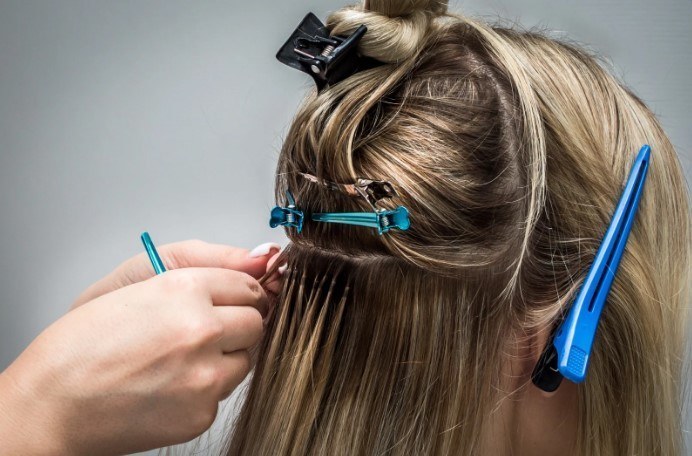
Bringing it all together
Custom blending turns extensions from a simple length-and-volume addition into a genuine colour service, and the difference shows the moment light hits the hair from a different angle. When it’s eventually time for a change, proper removal of hair extensions protects the natural hair underneath so the next custom blend can start with a clean, healthy base rather than compounding damage from a previous set.