Contents:
- Why the Curling Iron Remains the Gold Standard
- Selecting the Right Curling Iron for Your Hair Type
- Barrel Material and Ionic Technology
- Automatic vs. Manual Rotation
- Preparing Your Hair for Optimal Results
- The Protective Spray Essential
- Blow-Drying for Better Curls
- Mastering Technique: How to Curl Hair Section by Section
- The Core Curling Technique
- Direction and Pattern
- Pro Tips: What the Professionals Know
- A Seasonal Timeline: When to Adjust Your Approach
- Specific Techniques for Different Curl Styles
- Tight Ringlets
- Soft Waves
- Beachy Texture
- Protecting Ends and Preventing Damage
- Practical Tips for Common Challenges
- Curls Won’t Hold
- Frizz Appears During Curling
- Curling Iron Pulls or Catches Hair
- Finishing: Hairspray and Longevity
- Reader Story: From Frustration to Confidence
- Frequently Asked Questions
- How long should curls last after using a curling iron?
- Can you curl hair that’s been recently coloured?
- What’s the difference between a curling iron and a waving tool?
- Should you use a heat protectant every time you curl your hair?
- Can you curl very short hair with a curling iron?
- Conclusion: Building Your Curling Practice
The heat is warm against your fingertips. You wrap a section of hair around the barrel, watching the strand transform from straight to sinuous in mere seconds. The room fills with the gentle hum of the tool and the faint scent of the protective spray you applied moments ago. This is the moment when chemistry and technique meet—when the curling iron becomes an extension of your hands rather than a device you’re fighting to control.
Learning how to curl hair with a curling iron is not simply about waving a heated tool through your locks. It’s about understanding your hair’s structure, mastering the mechanics of heat distribution, and developing a rhythm that produces consistent, beautiful results. Whether you’re preparing for a special occasion or creating everyday waves, the curling iron remains one of the most versatile styling tools available today.
Why the Curling Iron Remains the Gold Standard
The curling iron has dominated the hair-styling landscape for over a century, yet its enduring popularity isn’t nostalgic sentiment—it’s justified by performance. A quality curling iron offers precision that other tools struggle to match. You control the tension, the temperature, the time the heat contacts your hair, and the direction of the curl in ways that diffusers, waving tools, or even blow-dry brushes cannot replicate.
Modern curling irons have evolved significantly from their predecessors. Today’s tools feature ceramic or tourmaline-coated barrels that distribute heat more evenly, ionic technology that reduces frizz, and temperature controls that let you protect delicate strands. In 2026, the curling iron technology market includes options ranging from budget-friendly models at £15-20 to professional-grade tools exceeding £100, each with distinct heating capabilities and barrel sizes.
The fundamental appeal remains constant: results. A properly used curling iron creates curls with definition, movement, and longevity that last throughout the day or evening.
Selecting the Right Curling Iron for Your Hair Type
Before you begin, the tool you choose matters profoundly. Barrel diameter directly determines your curl type. A 13mm barrel creates tight ringlets. A 25-32mm barrel produces soft, romantic waves. A 38-50mm barrel delivers loose, beachy movements. For thick or textured hair, opt for a barrel at least 32mm wide; finer hair generally works better with 19-25mm.
Temperature settings are equally critical. Fine or colour-treated hair should never exceed 300°F (150°C). Standard hair can handle 350°F (175°C). Thick, coarse, or resilient hair may require 400°F (200°C) or slightly higher for curls to set properly. Most professionals recommend allowing the curling iron to heat for 30-60 seconds before use—a step many people skip despite its importance for consistent results.
Barrel Material and Ionic Technology
Ceramic barrels heat evenly and release heat gradually, preventing hot spots that damage hair. Tourmaline-coated barrels emit negative ions that seal the hair cuticle, reducing frizz significantly. If you spend time styling weekly, investing in a tourmaline tool at £40-60 delivers measurable improvements in shine and frizz reduction compared to basic metal barrels.
Ionic technology isn’t marketing magic—it’s chemistry. Negative ions neutralise positive ions in the air that normally repel each other, causing frizz. Studies from the Journal of Cosmetic Dermatology (2024) confirm that ionic styling tools reduce frizz by approximately 26% compared to non-ionic tools when used consistently.
Automatic vs. Manual Rotation
Automatic rotating curling irons simplify technique—the barrel rotates, you insert and hold. These tools cost £35-80 and produce consistent curls with less skill required. Manual irons demand more technique but offer greater control over tension and curl direction, making them preferred by experienced stylists who know exactly what they’re doing.
Preparing Your Hair for Optimal Results
Success with a curling iron begins before heat touches your hair. Clean hair holds curls better than dirty hair, but not freshly washed hair. Ideally, curl your hair 24-48 hours after shampooing, when natural scalp oils have distributed throughout the length. These oils act as a protective barrier.
The Protective Spray Essential
A heat protectant spray isn’t optional—it’s foundational. Apply it to damp hair before blow-drying, ensuring even coverage. Most effective heat protectants contain silicones that create a microscopically thin barrier between your hair and direct heat. Look for products listing “dimethicone” or “cyclomethicone” as primary ingredients. Brands like Moroccan Oil Heat Protectant (£16) or VO5 Protective Styling Spray (£4) both offer reliable protection across different price points.
Spray too little and you leave sections unprotected. Spray too much and you weigh down fine hair. The right amount darkens your hair slightly when wet but doesn’t drip or feel greasy when dry—typically one 2-3 second spray mist for shoulder-length hair.
Blow-Drying for Better Curls
Completely drying your hair before curling matters more than most people realise. Moisture prevents heat from setting the curl shape. Blow-dry your hair smooth, directing the dryer downward along the hair shaft to align the cuticle. This creates a smoother surface for curling and produces shinier results. Allow hair to cool slightly before beginning—warm hair is harder to curl because it’s more flexible.
Mastering Technique: How to Curl Hair Section by Section
Sectioning transforms curling from a random process into a systematic one. Divide your hair into 4-6 horizontal sections, depending on thickness and length. Thicker hair or longer lengths require more sections—5-6 sections. Fine or shoulder-length hair may need only 3-4. Secure unstyled sections with clips, releasing one section at a time.
The Core Curling Technique
Take a subsection approximately 2-3 inches wide and 1.5 inches thick—roughly the width of your curling iron barrel. Position the iron near the roots, clamping the hair inside the barrel without pinching your scalp. This is crucial: the curl’s longevity depends on including the roots. Hair curls set from the inside out, and without root tension, curls drop within hours.
Rotate the iron away from your face (for front sections) or away from your neck (for back sections) and slowly glide it toward the ends. This motion should take 8-12 seconds for standard hair. Don’t rush—slow movement allows heat to penetrate fully and curl to form. At the ends, hold the iron still for 3-5 seconds before releasing.
As you release, keep the curl compressed in your hand for 10-15 seconds while it cools. This cooldown period is when the curl actually sets into shape. Skip this step and the curl relaxes immediately, lasting only hours instead of a full day.
Direction and Pattern
Alternating curl direction creates natural-looking volume. Curl the first section away from your face, the second section toward your face, the third away again. This variation prevents a helmet-like appearance and creates dimension. For the crown section, curl all hair away from your face to enhance height and movement.
Pro Tips: What the Professionals Know
Thickness of sections directly affects curl hold time. Stylists use thinner sections (1-inch wide) when they need curls to last 24+ hours, particularly for events. Thicker sections (2.5-3 inches) create faster styling for everyday waves that relax naturally by evening. The principle is simple: thinner sections receive more heat penetration and set more permanently.
Hair density matters more than length. A client with shoulder-length, thick hair often needs more time per section than someone with waist-length, fine hair. Thick hair conducts heat differently and requires longer heat exposure—typically 12-15 seconds rather than 8-10 seconds.
Temperature consistency prevents damage. Professionals keep their irons at the same temperature throughout a session rather than adjusting it section-by-section. Temperature fluctuations stress the hair cuticle. Pick the appropriate temperature for your hair type and maintain it.
A Seasonal Timeline: When to Adjust Your Approach
Environmental conditions affect curling results more significantly than most people recognise. April through June (spring and early summer) typically bring increasing humidity, which relaxes curls. If you’re curling for an event during these months, plan to curl closer to event time—curls set during the morning may drop by evening. Use a heavier hold hairspray, or consider curling 2-3 hours before your event rather than styling in advance.
July and August (peak summer) bring high heat and humidity. Curls relax quickly regardless of technique. Many stylists recommend creating tighter curls in summer because they’ll naturally relax to the desired shape. Additionally, apply hairspray in light mists rather than heavy applications; product buildup in heat makes curls stick and creates a stiff appearance.
September and October (autumn) offer ideal curling conditions—moderate temperature and humidity allow curls to set and hold for 18-24 hours. This is the season when most people report their best curling results, often attributing success to improved technique when actually the environment is simply more cooperative.
November through March (winter) brings dry indoor heating, which can make curls crispy if over-sprayed. In winter, use lighter hairspray and focus on deep conditioning treatments twice weekly to maintain moisture balance. Dry hair creates frizzy curls, so hydration is essential during these months.
Specific Techniques for Different Curl Styles
Tight Ringlets
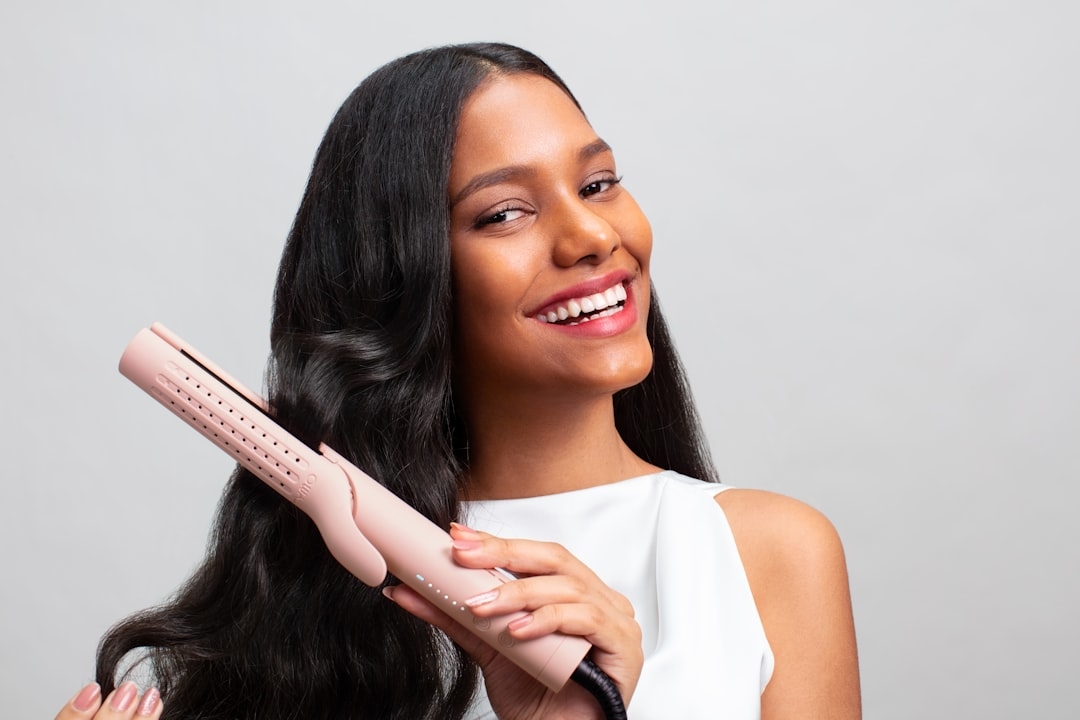
Achieve tight ringlets with a 13-19mm barrel and thin sections (1-inch wide). Wrap hair completely around the barrel, ensuring 2-3 full rotations. Hold for 15-20 seconds. Cool completely before releasing. Tighter curls require higher temperature—350°F (175°C) minimum for reliable setting. Tight ringlets last 24-36 hours with proper cooldown time and hairspray.
Soft Waves
Soft waves use a 32-38mm barrel with thick sections (2.5-3 inches wide). Curl only the bottom two-thirds of the hair length, leaving the top section uncurled for softness. Hold heat for 8-10 seconds. Soft waves typically relax to a more natural movement by evening, which many people prefer for everyday styling. These curls last 12-18 hours.
Beachy Texture
Beachy curls require a 38-50mm barrel and variable tension. Clamp the iron loosely rather than tightly, and rotate it slowly without fully wrapping the hair. This creates an undulation rather than a defined curl. Beachy curls look best when slightly relaxed, so curl your hair 2-3 hours before wearing it. Use texture spray (not hairspray) to maintain movement and prevent stiffness.
Protecting Ends and Preventing Damage
Hair ends are oldest and most fragile. Direct heat exposure damages ends more severely than the hair shaft. When curling, avoid clamping the iron at the very end of your hair. Instead, stop approximately 0.5 inches from the tip and release gently. This protects the most delicate section.
Split ends prevent curls from forming properly because the damaged cuticle can’t hold the shape. Trim your hair every 8-10 weeks to maintain healthy ends. This single practice improves curling results more noticeably than any product or technique change.
Temperature and frequency create cumulative damage. If you curl your hair more than 3 days weekly, reduce temperature by 25°F (approximately 14°C) compared to less frequent styling. Alternatively, use heat protectant products rated for frequent use—these contain additional conditioning agents that compensate for cumulative heat stress.
Practical Tips for Common Challenges
Curls Won’t Hold
If curls drop within hours, suspect one of three issues: insufficient root tension, inadequate cooldown time, or insufficient heat. Root tension is most often the culprit. Ensure you’re clamping at the very root, even if it’s uncomfortable positioning. Hold the cooled curl for full 15 seconds before releasing. If curls still relax, increase temperature by 25°F and try again on a fresh section.
Frizz Appears During Curling
Frizz during the curling process indicates dry hair or insufficient heat protection. Apply heat protectant more generously and ensure your hair is fully dry before beginning. If frizz appears only at the very ends, you may be clamping the iron too tightly or holding heat too long—reduce pressure and decrease time by 2-3 seconds.
Curling Iron Pulls or Catches Hair
A catching sensation means the barrel surface has residue buildup. Clean your curling iron barrel weekly with a damp cloth or specialised barrel cleaner. Buildup reduces glide and creates friction that pulls hair. Additionally, ensure your hair is completely dry; damp hair sticks to the barrel and gets caught when you rotate the iron.
Finishing: Hairspray and Longevity
The right hairspray extends curl life by 6-12 hours. Light hairsprays work for fine hair and everyday waves; firm-hold sprays suit tight ringlets or event styling. Apply in light, even mists holding the can 6-8 inches away. One concentrated spray will flatten curls; multiple light mists maintain shape and movement.
For maximum longevity, apply hairspray while curls are still cooling if possible, or within 10 minutes of completing your styling. This sets the shape while the hair is most receptive. Avoid touching or running fingers through curls until the hairspray dries completely—roughly 3-5 minutes.
Overnight curl preservation matters if you styled in the evening. Sleep on a silk or satin pillowcase, which creates less friction than cotton. A loose braid or low bun helps curls hold their shape rather than flattening against the pillow. In the morning, mist curls lightly with hairspray and gently separate them with your fingers rather than combing, which disrupts the curl pattern.
Reader Story: From Frustration to Confidence
Sarah, a 34-year-old from Bristol, spent two years struggling with her curling iron before achieving consistent results. She had fine, colour-treated hair that seemed to resist curling no matter what she tried. Curls would drop within 3-4 hours, and she’d grown accustomed to thinking curling simply wasn’t possible for her hair type. The turning point came when she changed two things: first, she switched to a 19mm barrel and thinner sections, recognising that her fine hair needed a smaller barrel than guides suggested for her length. Second, she started incorporating the full 15-second cooldown period, something she’d previously skipped because she was in a hurry. Within three attempts, her curls lasted the full day. “It wasn’t about a better tool,” she reflected. “It was about understanding my specific hair and committing to the process, not rushing through it.” Her experience mirrors patterns many stylists observe: excellent results come less from equipment and more from technique matched to individual hair characteristics.
Frequently Asked Questions
How long should curls last after using a curling iron?
Curl longevity depends on hair type, technique, and environmental conditions. Fine hair typically holds curls for 12-18 hours. Medium hair holds 18-24 hours. Thick or coarse hair can maintain curls for 24-36 hours. Humidity significantly reduces longevity—curls may last only 6-8 hours in wet conditions but 24+ hours on dry days. Proper cooldown time and hairspray application can extend longevity by 6-12 hours regardless of hair type.
Can you curl hair that’s been recently coloured?
Yes, but with precautions. Wait at least 48-72 hours after colouring before heat styling to allow the colour molecules to fully set. Use temperature no higher than 300°F (150°C) for freshly coloured hair, as heat can lighten colour or cause uneven fading. Always use a heat protectant formulated for colour-treated hair. Deep condition twice weekly during the first month after colouring to counteract the cumulative drying effects of both chemical treatment and heat styling.
What’s the difference between a curling iron and a waving tool?
Curling irons have a circular barrel you manually rotate around and through. Waving tools feature a series of ridges or waves built into the barrel and typically work with a clamping motion. Waving tools create consistent texture quickly but offer less control over individual curl direction and shape. Curling irons demand more technique but deliver more varied results and customisation. Neither is objectively superior—they serve different purposes and preferences.
Should you use a heat protectant every time you curl your hair?
Yes. Heat protectants work by creating a barrier that prevents direct heat contact with the hair cuticle, significantly reducing damage potential. Even occasional curling without protection accumulates damage over months. People who curl weekly should absolutely use heat protectant every session; those curling occasionally should use it consistently as well. The investment is minimal—quality heat protectants cost £4-16—compared to the cost of repairing heat damage through deep conditioning or professional treatments.
Can you curl very short hair with a curling iron?
Yes, though technique differs significantly. Hair shorter than 2 inches requires a 13-19mm barrel and careful clamping near the roots to prevent the iron from sliding off. Very short hair holds curls for only 4-8 hours maximum due to reduced hair length and weight. The most effective approach is curling immediately before styling and using firm-hold hairspray. Many people with very short hair find that blow-dry techniques or texture products work better than curling irons, but curling irons remain viable with adjusted expectations.
Conclusion: Building Your Curling Practice
Mastering how to curl hair with a curling iron transforms your styling options from occasional waves to reliable, customisable curls whenever you want them. The skill deepens through practice—your hands develop intuitive understanding of barrel temperature, section width, and timing that no amount of reading can fully convey. Your first attempts may produce uneven results. This is normal. The 15th attempt will be significantly better, and by attempt 50, you’ll work efficiently enough to curl your entire head in 20-25 minutes.
Start with the fundamentals: the correct barrel size for your desired curl style, consistent temperature suited to your hair type, sections methodical and even, root tension deliberate, cooldown time non-negotiable, and hairspray applied strategically. Build from this foundation. Experiment with different section thicknesses to see how they affect hold time. Try adjusting temperature by 25°F and notice the difference in curl tightness and shine. Keep a simple note of what works—which barrel diameter produces your preferred result, what temperature your hair responds best to, how long you prefer curls to hold.
Your curling iron is not your stylist—you are. The tool responds to how you use it. With attention to technique and knowledge of your specific hair, the results you see in professional styling become entirely achievable at home.