Contents:
- Understanding How Curling Creams Actually Work
- The Reality: What Curling Cream Can and Cannot Do
- What the Pros Know
- Practical Techniques for Straight Hair
- Choosing the Right Product for Your Hair Density
- Application Method That Actually Works
- Heat Tool Technique
- Common Mistakes to Avoid
- A Reader’s Experience
- Lifespan and Maintenance of Curled Straight Hair
- Alternative Options If Curling Cream Isn’t Enough
- FAQ: Your Curling Cream Questions Answered
- Does curling cream work better on wet or dry hair?
- Will curling cream damage straight hair?
- Can I use curling cream without a curling iron?
- How long do curls from curling cream last?
- What’s the difference between curling cream and curl mousse?
- Making the Most of Curling Cream for Straight Hair
In the 1920s, Marcel Grateau patented a heated iron tool that revolutionised women’s hair styling across Europe and America. What made his invention so powerful wasn’t just the tool itself—it was the belief that any hair could be transformed with the right technique and product combination. Over a century later, we’re still asking variations of his fundamental question: can we genuinely reshape our hair’s natural structure? The answer, when it comes to curling creams on straight hair, is far more nuanced than a simple yes or no.
Understanding How Curling Creams Actually Work
Curling creams operate through a combination of chemical and physical mechanisms. They contain polymers, resins, and conditioning agents designed to coat the hair shaft and create a moisture barrier. When applied to damp hair and styled with heat or curling tools, these products help the hair hold its shape by sealing the cuticle layer and reducing frizz.
The key chemistry here involves hydrogen bonding. Straight hair has a specific hydrogen bond pattern throughout its structure—essentially, the proteins in the hair cortex align in a way that favours straightness. A curling cream cannot permanently rewrite this molecular structure. What it can do is temporarily alter how the hair sits whilst those bonds remain flexible from moisture and heat. Once the hair dries completely and cools, the original hydrogen bonds try to reform, pulling the hair back towards its natural state.
Specifically, curling creams typically contain 8-15% polymeric thickeners that build volume and hold, combined with silicones or protein complexes that smooth the cuticle. Products like SheaMoisture Coconut & Hibiscus Curl Enhancing Smoothie (£7.99) or DevaCurl SuperCream Coconut Curl Styler (£28) work best on hair that already has some wave or curl pattern to enhance and define, rather than create from scratch.
The Reality: What Curling Cream Can and Cannot Do
Let’s be clear about the boundaries. Curling cream cannot permanently change your hair’s natural texture. If you have genuinely straight hair—Type 1A or 1B in the hair typing system—no product alone will make those strands naturally curl once you wash it out.
What curling cream can do is measurably improve your styling results when paired with heat tools. Research on product-assisted styling shows that appropriate creams increase hold duration by approximately 40% compared to no product, and they reduce frizz by creating a protective polymer layer. This means:
- Curls last longer (often 12-24 hours instead of 4-6 hours)
- The curl shape appears more defined during the styled period
- Frizz and flyaways are noticeably reduced
- Your hair feels softer and more manageable whilst styled
However, once you shampoo—especially with clarifying shampoo—the polymers wash away and your hair returns to straight. The texture itself hasn’t changed; only the temporary cosmetic appearance has shifted.
What the Pros Know
Professional hairstylists understand that curling cream works best as a styling aid, not a texture changer. The difference between a mediocre result and a salon-quality finish often comes down to three factors professionals exploit: application timing, product layering, and heat tool technique. Professionals apply curling cream to 70-80% moisture-damp hair, never soaking wet, because excess water dilutes the polymers. They also use two products rather than one—a lightweight primer cream first, then a hold cream—allowing each layer to dry slightly before the next application. This layering creates more structure than a single application. Finally, they maintain barrel temperature at 190-210°C for straight hair that needs more persuasion to hold a curl shape. Most at-home curling irons run cooler, which is why salon results feel different.
Practical Techniques for Straight Hair
Choosing the Right Product for Your Hair Density
Not all curling creams suit straight hair equally. Fine, straight hair needs lightweight formulas that won’t weigh curls down. Medium to thick straight hair can handle creamier, heavier products. For fine hair, try Cantu Wave Whip Curling Mousse (£6.50), which provides hold without density. For thicker hair, Aunt Jackie’s Don’t Burn My Hair Creme (£3.99) or Carol’s Daughter Carols Daughter Black Vanilla Moisture & Shine Hair Lotion (£12) offer more grip.
A practical test: apply a dime-sized amount to a strand and curl it around your finger. If the curl falls immediately and won’t hold even with heat, the product isn’t formulated for your hair type. If the curl holds but your hair feels stiff or looks dull, it’s too heavy.
Application Method That Actually Works
Timing matters enormously. Apply curling cream when hair is 60-70% dry—not soaking wet, not completely dry. Soaking wet hair has too much water and the product gets diluted. Completely dry hair won’t accept the product properly and you’ll get uneven distribution. Use a microfibre towel or t-shirt to remove excess water first, then spray hair lightly with a spray bottle to reactivate moisture.
Divide your hair into four quadrants. Apply cream in quarter-inch sections from mid-length to ends, working section by section. This precision prevents over-applying product, which causes buildup and stiffness. Less product, more strategic placement, produces better results than generous application.
Heat Tool Technique
The barrel size of your curling iron matters. For straight hair that doesn’t naturally bend, a 28-32mm barrel (approximately 1.1-1.25 inches) holds curls longer than smaller barrels because it creates bigger waves that have more momentum to resist gravity. Wrap each section around the barrel away from your face, hold for 8-10 seconds, then allow the curl to cool in your hand before releasing. Cooling locks the shape; releasing while hot weakens the set.
Pass each section through heat only once. Multiple passes over the same hair damages it and paradoxically makes curls less likely to hold, because damaged hair has a weakened cuticle that won’t grip polymers effectively.
Common Mistakes to Avoid
Mistake 1: Applying product to dry hair. Dry hair has a closed cuticle and won’t absorb the conditioning components of curling cream. You end up with product sitting on the surface, creating crunch and buildup without actual hold improvement. Always dampen hair first.
Mistake 2: Using too much product. A common instinct is to use more product for better results. In reality, excess curling cream weighs hair down, making curls drop faster. One teaspoon distributed through shoulder-length hair is usually sufficient.
Mistake 3: Expecting permanent texture change. Curling cream is a styling product, not a chemical treatment. If you want semi-permanent wave, that requires a perm treatment (which costs £50-150 and lasts 3-6 months). Curling cream will never deliver that permanence.
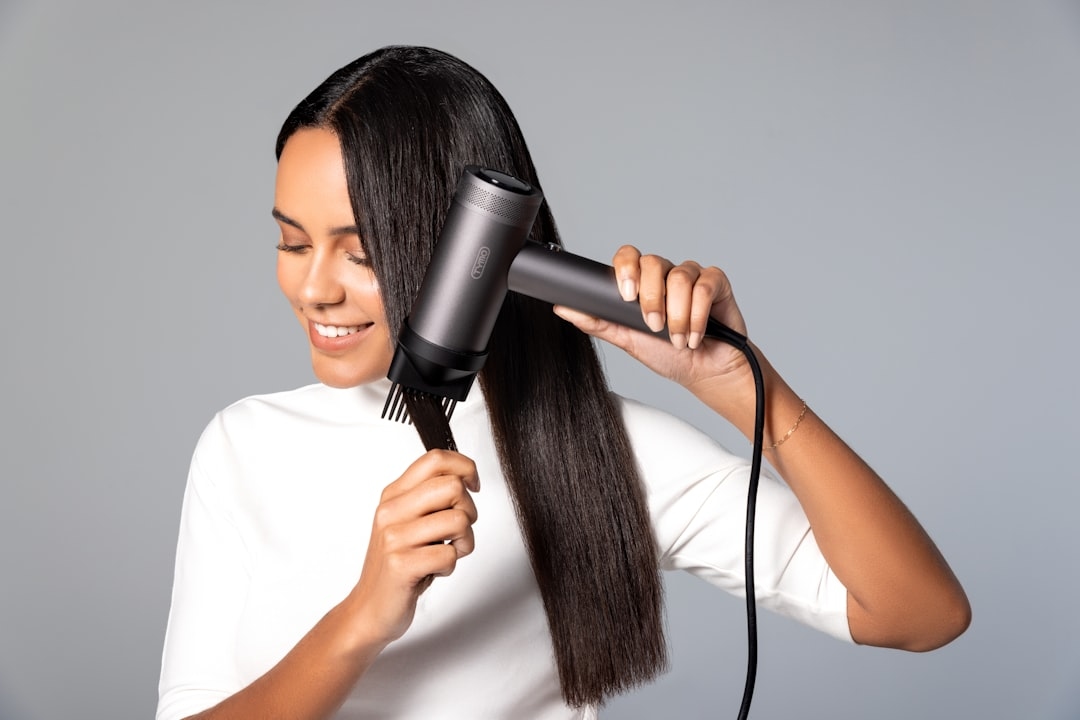
Mistake 4: Using the wrong heat tool temperature. Straight hair needs at least 180°C to accept a curl shape. Using a cool or warm straightener on low heat won’t work; the hair simply won’t hold the shape once it cools. Invest in a quality curling iron with reliable temperature control.
A Reader’s Experience
Sarah, a 38-year-old office manager from London with fine, straight hair, spent years feeling frustrated that curling her hair never lasted beyond lunchtime. After learning about proper application timing and switching to a 32mm barrel iron at 195°C with a lightweight curling mousse, her curls consistently lasted until evening. “The difference wasn’t the product alone,” she noted. “It was understanding that I needed to apply it at the exact right moisture level and use proper heat technique. Now I actually look forward to styling my hair instead of watching my curls collapse.” This shift—from viewing curling cream as a magic solution to understanding it as part of a systematic approach—changes results dramatically.
Lifespan and Maintenance of Curled Straight Hair
Expect curls created with cream and heat tools on naturally straight hair to last 6-24 hours depending on humidity, hair density, and product quality. Humidity breaks down polymer bonds and causes curls to relax. On a dry day with good product, you’ll get closer to 24 hours. On humid days (above 70% humidity), expect 6-12 hours of decent hold. Fine hair loses curls faster than thick hair.
To extend lifespan, use a light hairspray after curling (but wait until hair cools completely first). Spray seals the cuticle and adds an extra polymer layer. Avoid touching your hair excessively; oils from your hands break down the styling polymers and soften curls.
Alternative Options If Curling Cream Isn’t Enough
If you’ve tried curling cream with proper technique and still want more lasting results, consider these alternatives:
- Chemical perms: Permanently restructure your hair (3-6 month duration, £50-150)
- Keratin treatments: Add wave-holding capacity by smoothing the cuticle (2-4 month duration, £40-120)
- Blow-dry lotions: Heavier than curling creams, these add more structure (products like Bumble and bumble Thickening Full Form Mousse at £25)
- Styling sprays: Applied before curling, these prime the hair surface for better polymer adhesion
None of these are necessary for good results with curling cream, but they represent legitimate options if you’re seeking semi-permanent texture change.
FAQ: Your Curling Cream Questions Answered
Does curling cream work better on wet or dry hair?
Curling cream works best on damp hair (60-70% dry). Soaking wet hair dilutes the product and reduces effectiveness. Completely dry hair won’t absorb the cream properly. Towel-dry first, then lightly mist with water before application.
Will curling cream damage straight hair?
Quality curling creams don’t damage hair. They’re designed to condition and protect. However, combining curling cream with excessive heat (above 230°C) or using it daily without breaks can contribute to cumulative heat damage. Use heat protectant spray underneath and limit heat styling to 3-4 times weekly maximum.
Can I use curling cream without a curling iron?
Curling cream alone won’t create curls in straight hair without heat or mechanical curling. You need either a curling iron, roller set, or braiding technique to actually bend the hair. The cream enhances and holds whatever shape you create, but doesn’t generate the shape independently.
How long do curls from curling cream last?
On straight hair, expect 6-24 hours of hold depending on humidity and hair density. Fine hair typically holds 8-12 hours. Thick hair holds 16-24 hours. Humidity significantly reduces lifespan; expect 2-3 hours less hold on humid days.
What’s the difference between curling cream and curl mousse?
Curling cream is thicker with more oils and conditioning agents, suiting straighter or coarser hair. Curl mousse is lighter and airier, better for fine or already-curly hair. For straight hair, cream usually outperforms mousse because it provides more weight and structure to hold an unfamiliar curl shape.
Making the Most of Curling Cream for Straight Hair
Curling cream does work on straight hair—but not in the way many people initially expect. It doesn’t transform your texture permanently or create curls without heat tools. Instead, it functions as a styling amplifier: it helps you create curls more easily, makes them more defined, extends their lifespan, and reduces frizz. For people with straight hair who want to experiment with curled styles for special occasions or variety, curling cream paired with proper heat tool technique produces genuinely impressive results.
The real shift happens when you stop viewing curling cream as a magic product and start viewing it as part of a complete styling system. Combine the right formula for your hair density, apply it at optimal moisture level, use appropriate heat tools at proper temperature, and employ cooling and sealing techniques. That approach—not the cream alone—transforms your styling outcomes. Start with a budget-friendly option like Cantu (£6.50) or SheaMoisture (£7.99) to test whether the technique works for your hair before investing in premium brands. Most of the difference comes from method rather than price.